Ice skating can feel intimidating at first, but everyone starts in the same place — standing still on slippery ice and wondering what to do with their feet. The good news is that with the right posture and a few simple movements, skating quickly becomes enjoyable, controlled, and safe.
This guide covers the fundamentals every beginner should know: how to stand, move forward, and stop safely.
Once you have got your skates on (click for more information about different styles, and making sure they fit properly), read on...
The first skill in skating isn’t moving — it’s balancing.
When you step onto the ice:
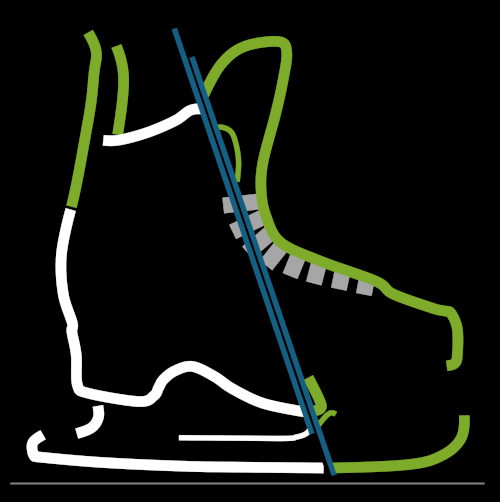
Your skates should be flat on the ice, not tipped onto the inside or outside edges. If you feel wobbly, bend your knees a little more — stiff legs make balance harder. Blades are slightly curved - ensure you're driving your weight down through the middle of the blade (or slightly towards the heel if in figure skates).
Tip: If you ever feel like you’re losing balance, bend your knees deeper rather than straightening up.
Good skating posture makes everything easier.
Think about:
Soft knees act like shock absorbers. They help you balance, turn, stop, and recover if you slip. Nearly every beginner mistake comes from standing too tall or too stiff.
Once you’re comfortable standing, it’s time to move.
Marching is the simplest way to start moving. For moving forward you must always ensure that your toes are pointed outward, with a small gap between your heels. Try to maintain this foot position throughout the exercise:
This teaches balance on one skate at a time and builds confidence. You should expect some slip of the skate when you place it back down. Don't resist it - the idea is to get comfortable balancing on the skate as it slides forwards. Just remember to keep your feet under your body, toes pointed out, balancing on the centre of the blade.
Lemons are one of the most important beginner movements.
To do a lemon:
Your skates stay on the ice the whole time, and the movement comes from your legs pushing outward, not from leaning forward.
Lemons teach:
Stopping is just as important as moving.
The safest beginner stop is the snowplough. As you're gliding forward:
Think of making a wide “V” shape with your skates. Keep your weight centred and knees bent — standing up makes stopping harder. If you find that your skates are sticking into the ice, causing your feet to come together, try to shift your balance more over one foot, let that foot glide forward while you control the other foot to gently carve the ice.
Never lean back when stopping. Staying over your skates keeps you in control.
Falling is a normal part of learning to skate — even experienced skaters fall from time to time. The key is knowing how to fall safely. If you lose balance, try to bend your knees and fall to the side, landing on your thigh and hip rather than straight down. Keep your hands up and in, avoiding putting them out flat on the ice to catch yourself, as this can lead to wrist injuries. Tuck your chin slightly so your head doesn’t snap back, and stay relaxed.
When getting back up, move to your hands and knees first, place one skate flat on the ice by your hands, then push up slowly while keeping your balance low.
If you are injured, always seek advice from the ice arena's on duty first aider. They will check you're ok and safe to continue.
Many ice arena's have skate aids available for hire, though there may be safety restrictions in their use. Generally skate aids provide a mobile support, but counter-intuitively they may prevent you from learning the techniques necessary for skating safely, because there is a tendency to apply your weight on them which brings your centre of balance too far forward.
Therefore, if you do decide to get a skate aid:
Ice skating is about control, balance, and confidence, not speed. Take your time, keep your knees soft, and focus on small, controlled movements. Everyone improves at their own pace, and the fundamentals you build early will support everything you learn later — from turns and crossovers to stops and spins.
If you ever feel unsure, slow down, bend your knees, and reset your posture. The ice will feel much more manageable when you do.
Ice Arena staff (the ice stewards) or regulars may be willing to help new skaters with a few tips.